02 / 03
METAGARDEN: The Unwritten Archetype
My practice interrogates how norms shape bodies and histories. This final project asks a more radical question: what exists before the norm?
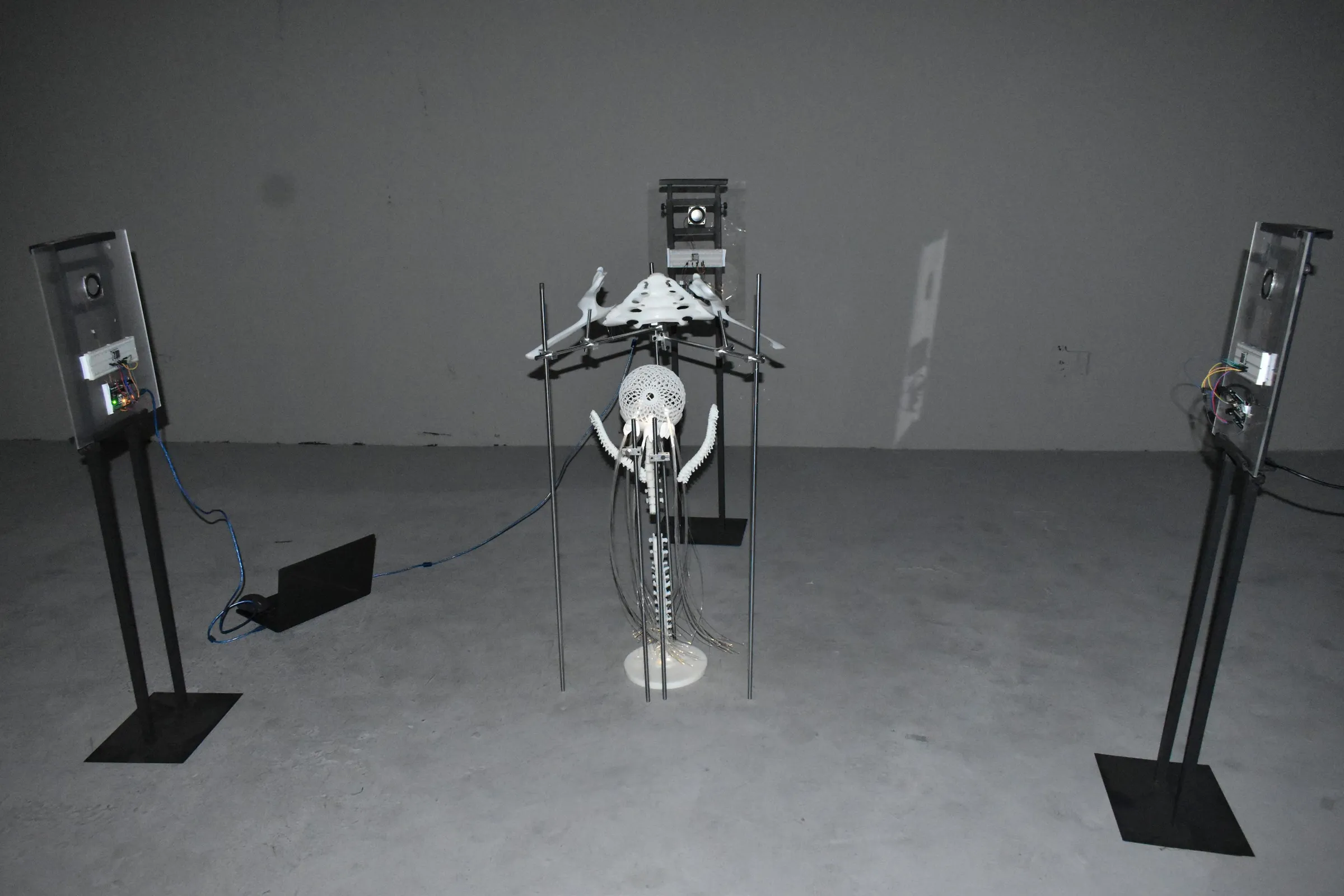
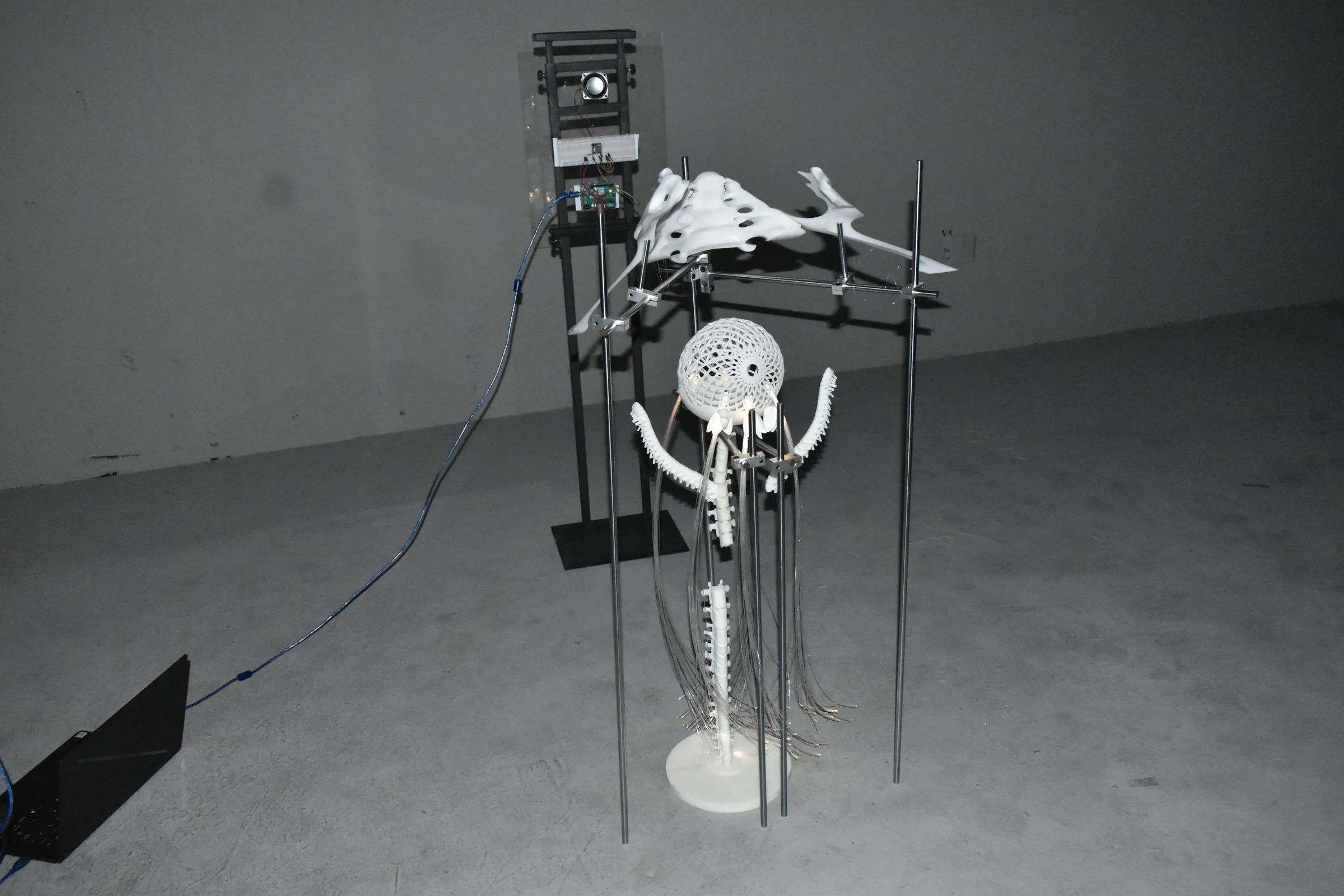
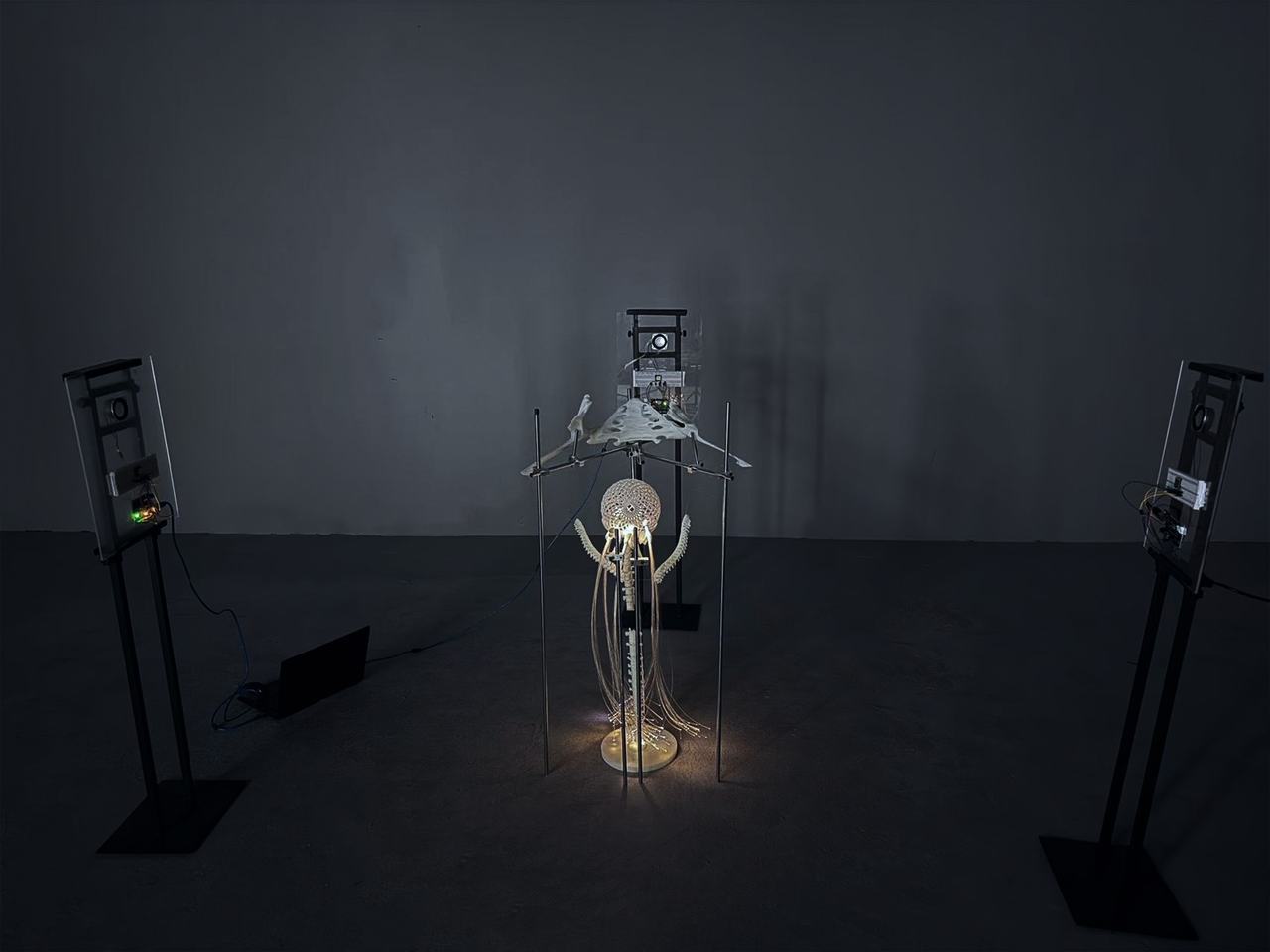
I stage this inquiry through the Crown Imperial. Its inverted crown subverts imposed order; its hermaphroditic form embodies a primal completeness. The interactive installation Metagarden makes our conditioned gaze visible: a viewer’s observation unconsciously alters the flower’s digital morphology, while a mechanical typewriter struggles to name these shifts, producing only fragmented text.
The work reveals that our search for a “pre-normative” state is paradoxically shaped by the norms we carry. True agency, then, lies not in escaping the normative frame, but in recognizing ourselves as both its product and its perpetual editor, continuously rewriting its terms.
Process
Inspiration
The idea grew from a personal experience: the wish to place myself within one group in society. That urge toward a gendered self-awareness led me to explore the differences between the sexes and the origins of life.
Fritillaria imperialis, the Crown Imperial, hangs its flowers upside down. I read this inverted crown as a symbol of subversion against externally imposed authority, such as gender norms, suggesting that true sovereignty of the self may lie in the courage to invert one's perspective.
Monique Wittig argues that gender is a social category, not a natural one; the hermaphroditic Crown Imperial shows that biology itself defies the binary. The artist Shifen Liu's Garden of Mullerian Ducts: Nutmeg (2016) offered another point of departure.
It is not a binary opposition; we can also simultaneously share the dual aspects of truth.
Shifen Liu
Mind map
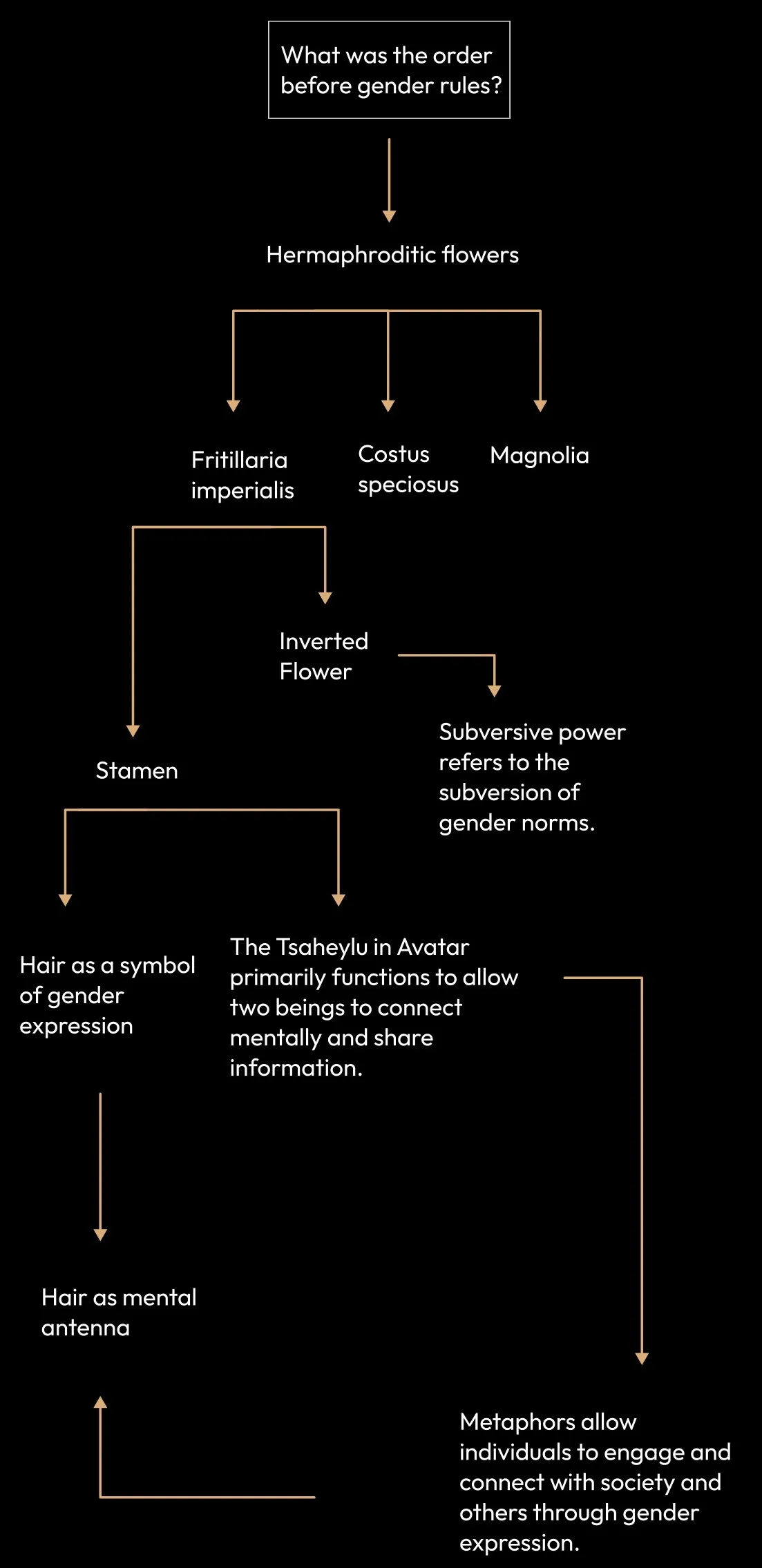
Starting from the question "What was the order before gender rules?", the research moved through hermaphroditic flowers to the inverted flower, its stamens, and hair as a mental antenna, echoing the Tsaheylu in Avatar, a bond that lets two beings connect and share information.
From this I designed a hallucinogenic plant that blends male and female traits, expressing a spiritual genderlessness beyond the binary: eyes that look and gaze, hair as a shared perception of gender, and the inverted flower as a manifestation of thought.
Form
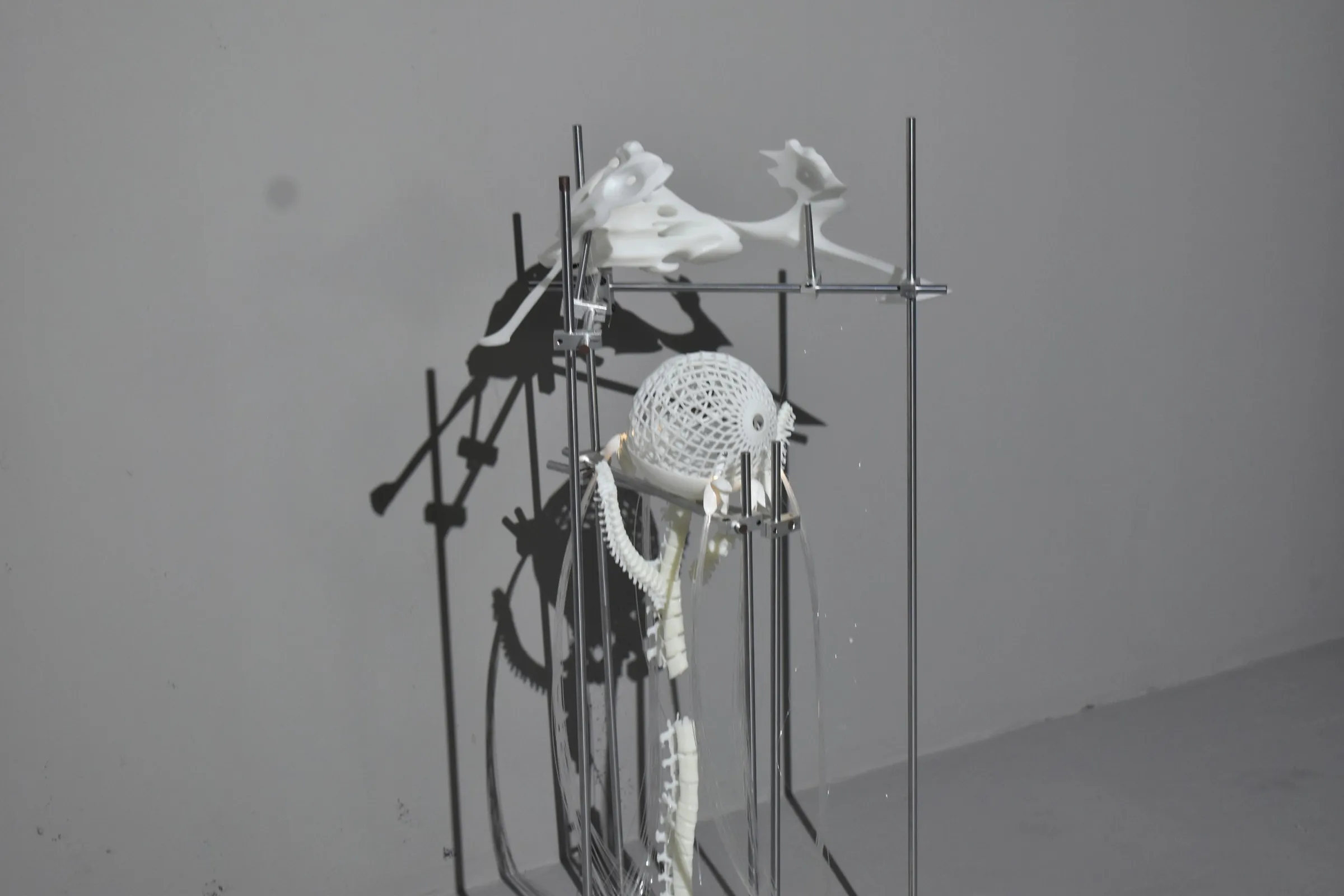
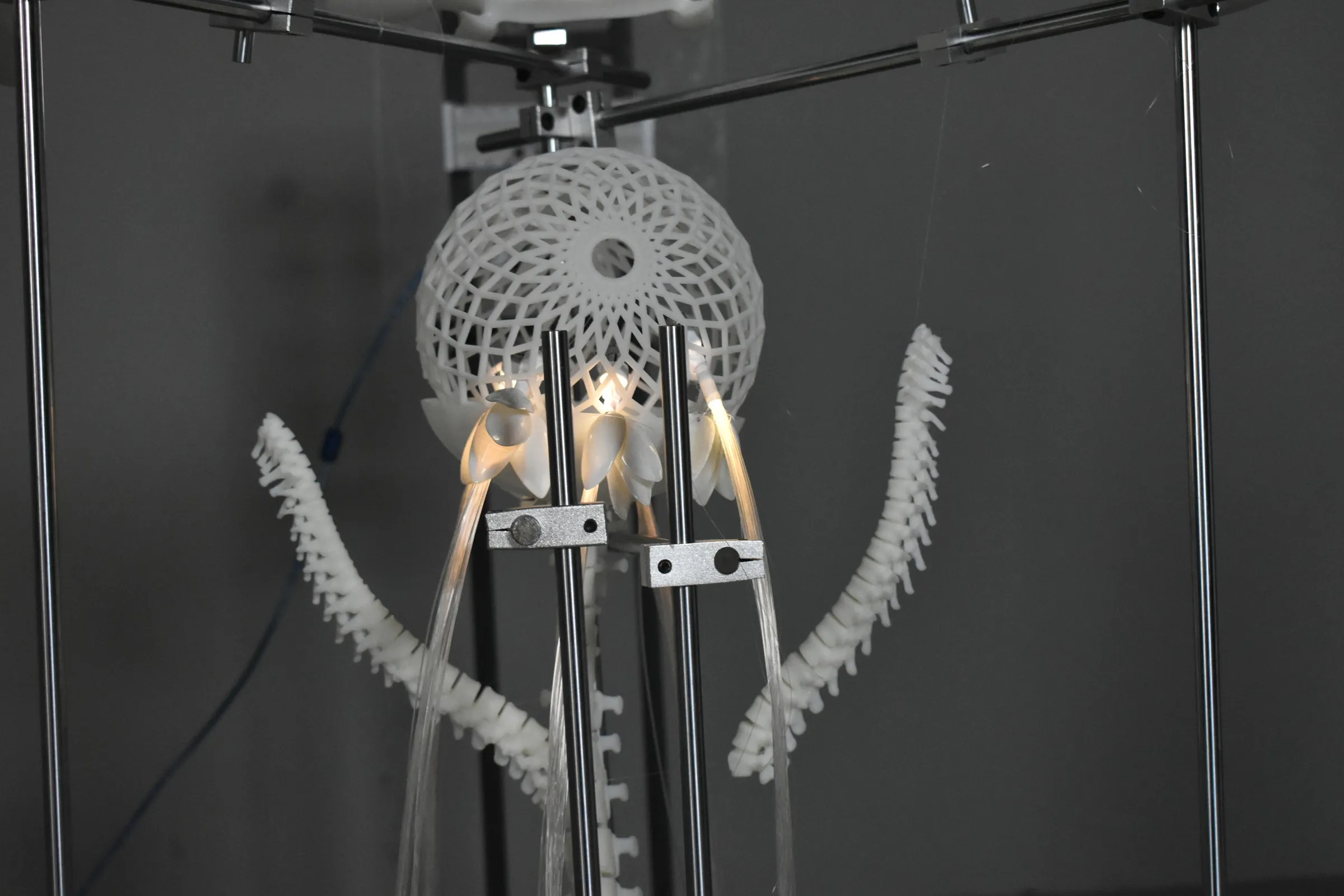
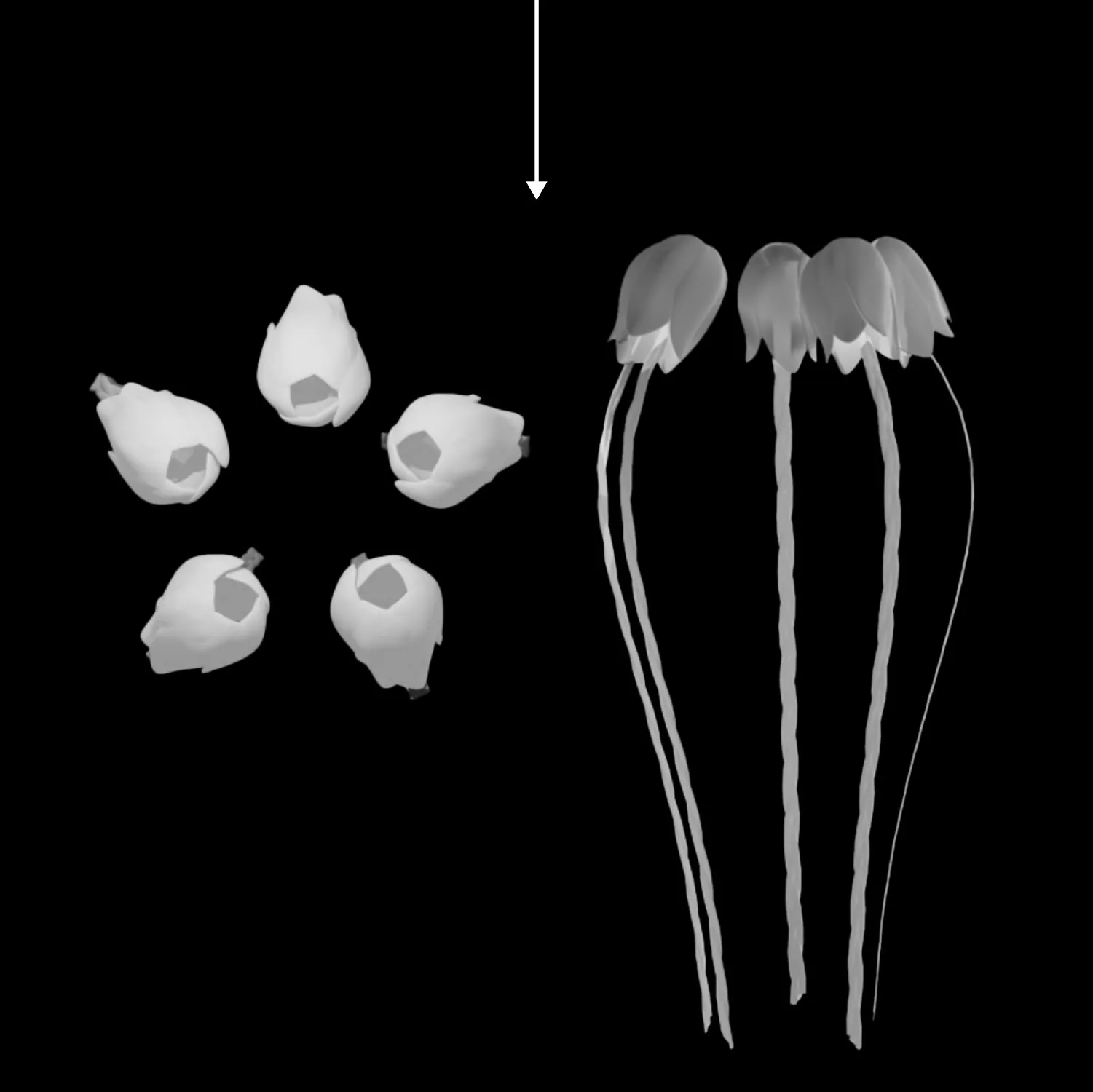
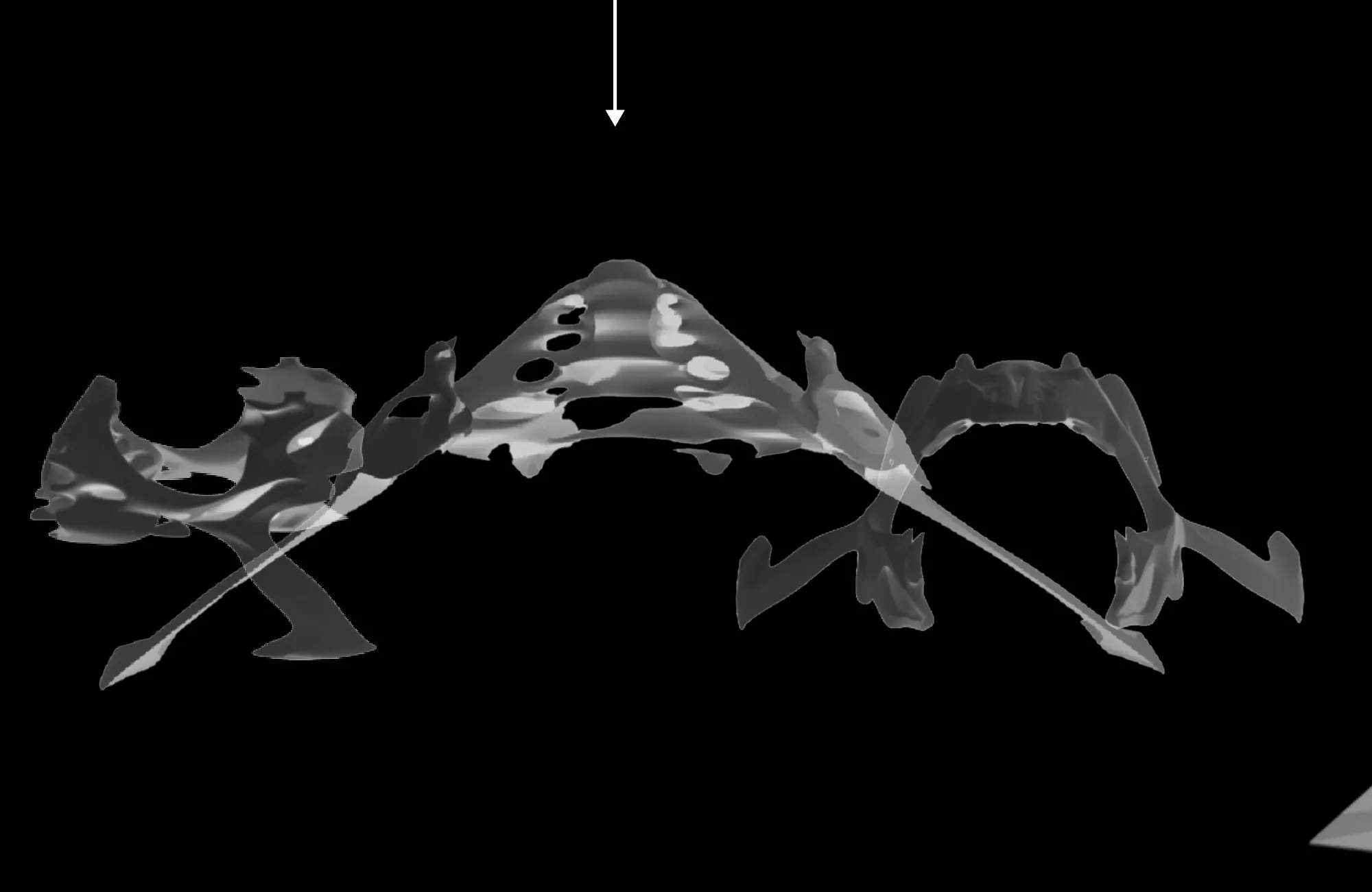
The installation reimagines the Crown Imperial's inverted bloom as a site of gender transfiguration. Its hermaphroditic form subverts binary logic, while its drooping posture becomes a receiver for new meaning. The whole work takes the form of five silk corollas, with optical fibers as their filaments and pistils.
Exhibition design
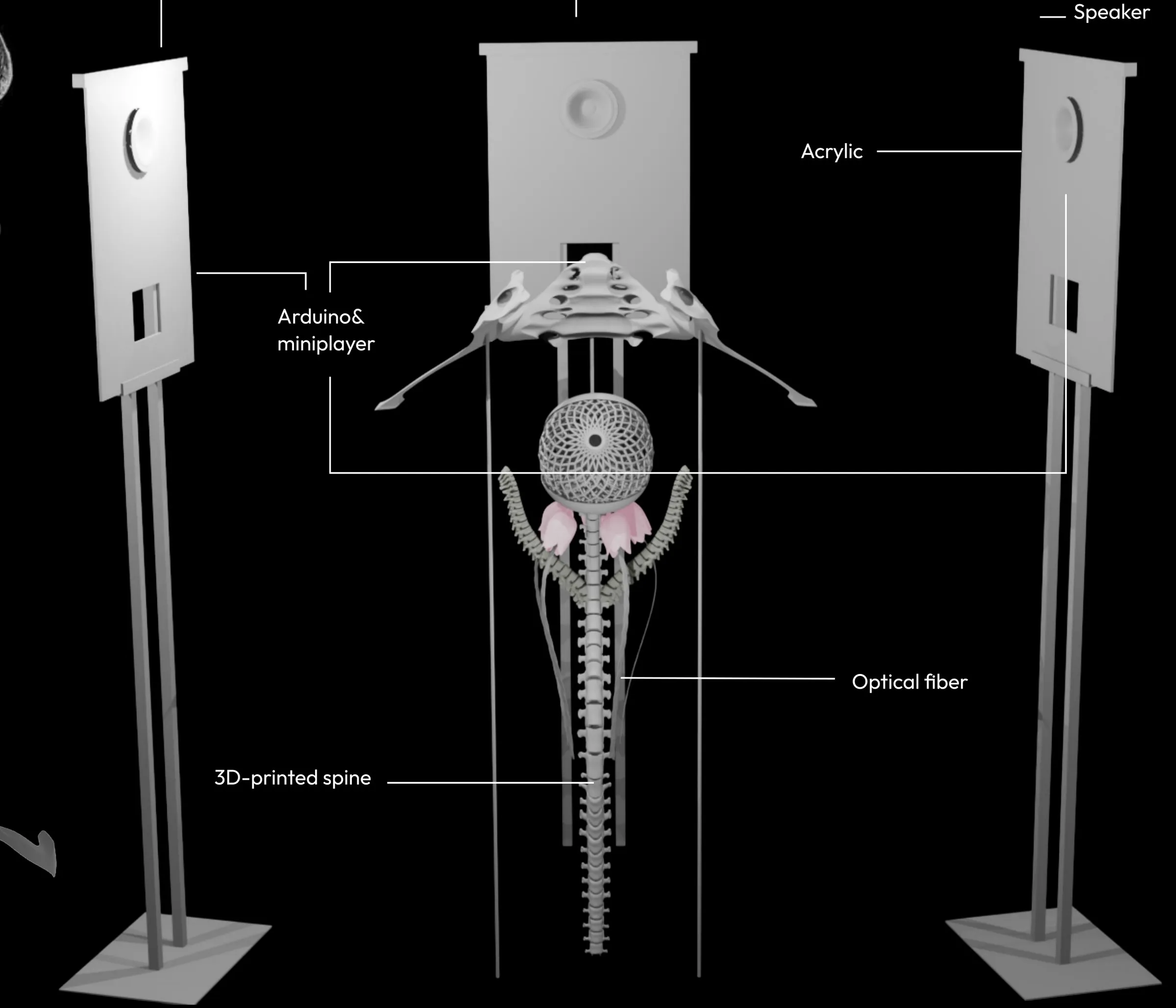
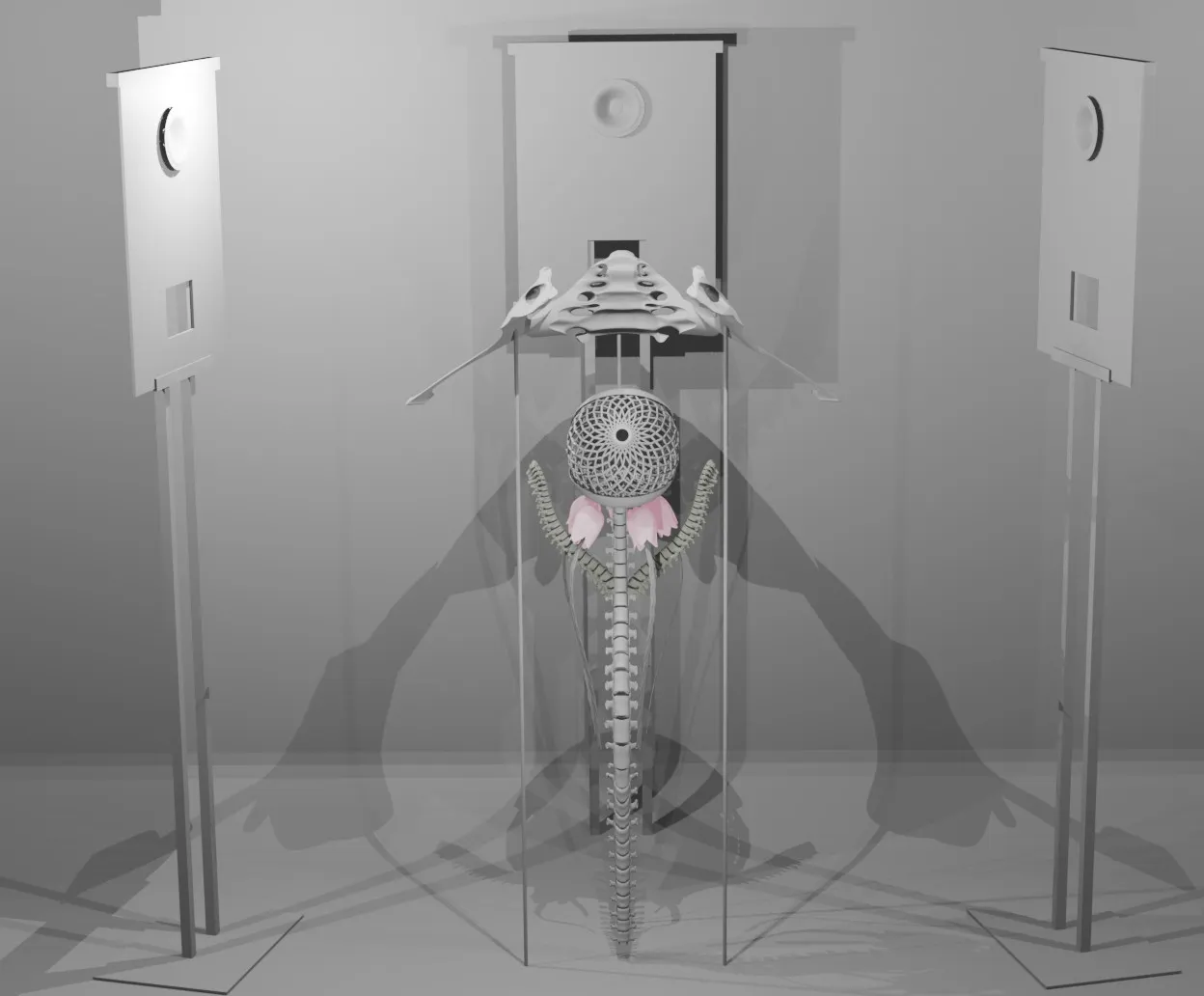
Sound design
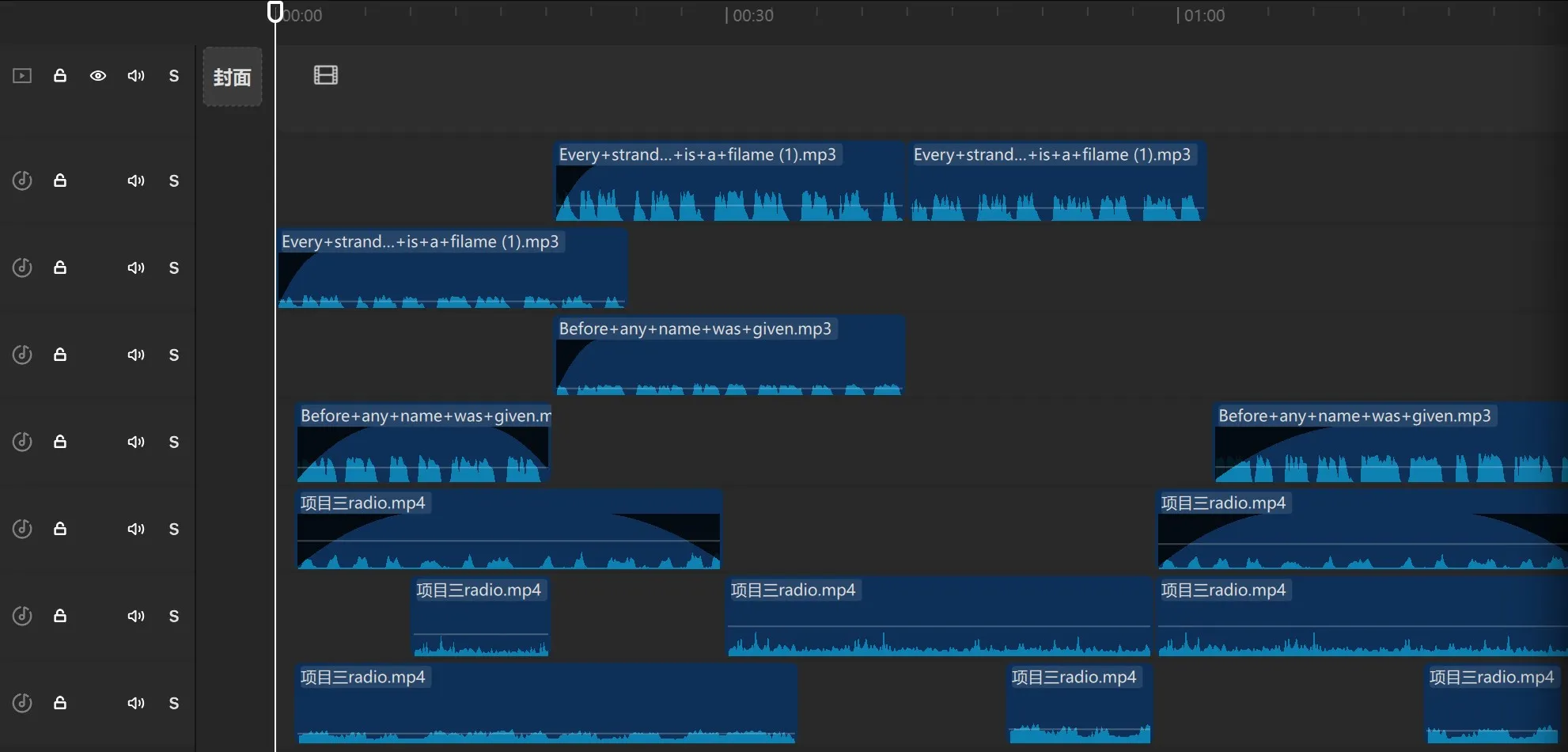
I recorded voice samples from male and female participants aged 22, 26 and 52 and layered them. The synthesized voices were fed to an AI model to generate one male and one female voice, which were then fused by slowing the audio down and applying glitch effects.
The sound reflects on the existence and integrity of a "pre-normative" self, before gender identity takes shape, and on the co-creation brought about by the audience's gaze. Distinctly gendered voices are combined, and glitches in their recombination make it hard for listeners to tell the speaker's gender, or whether the androgynous bouquet has any gender at all.
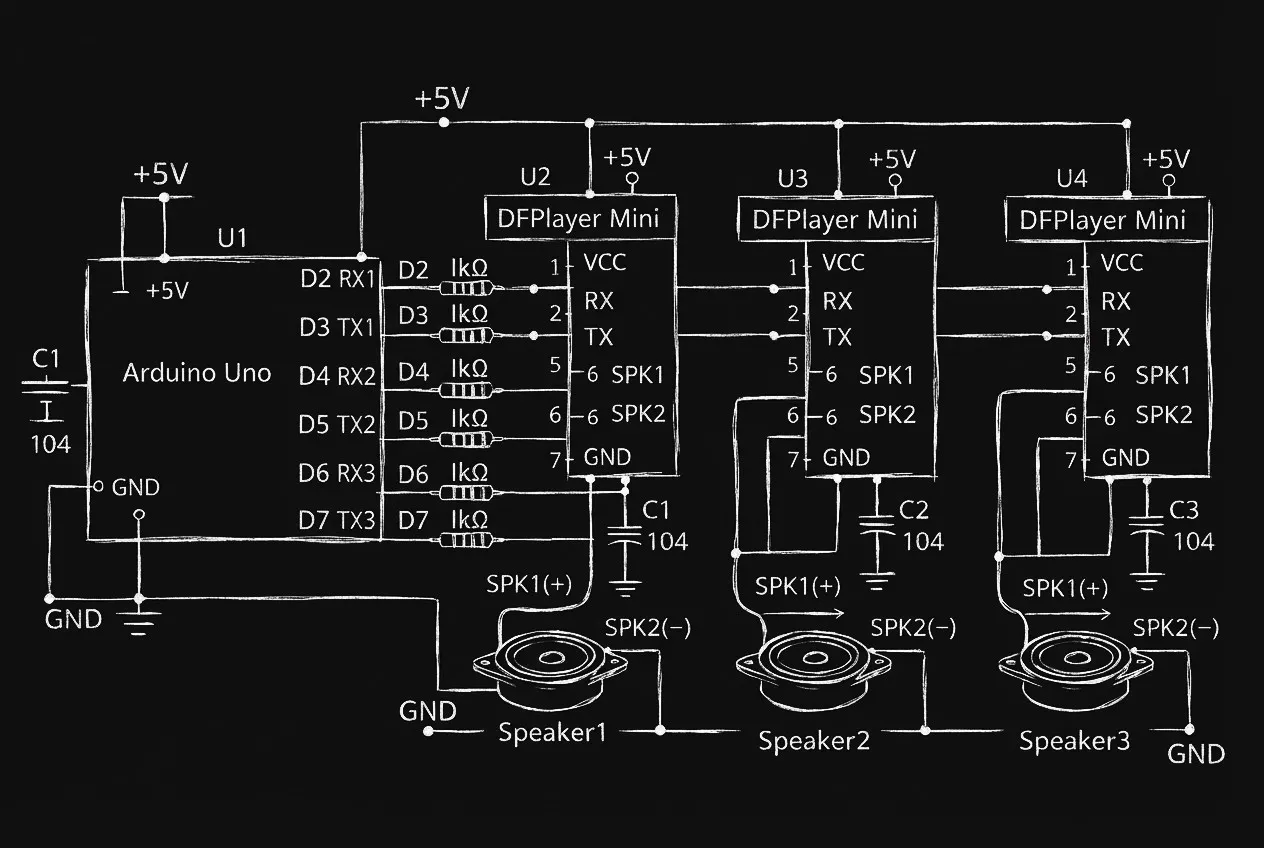
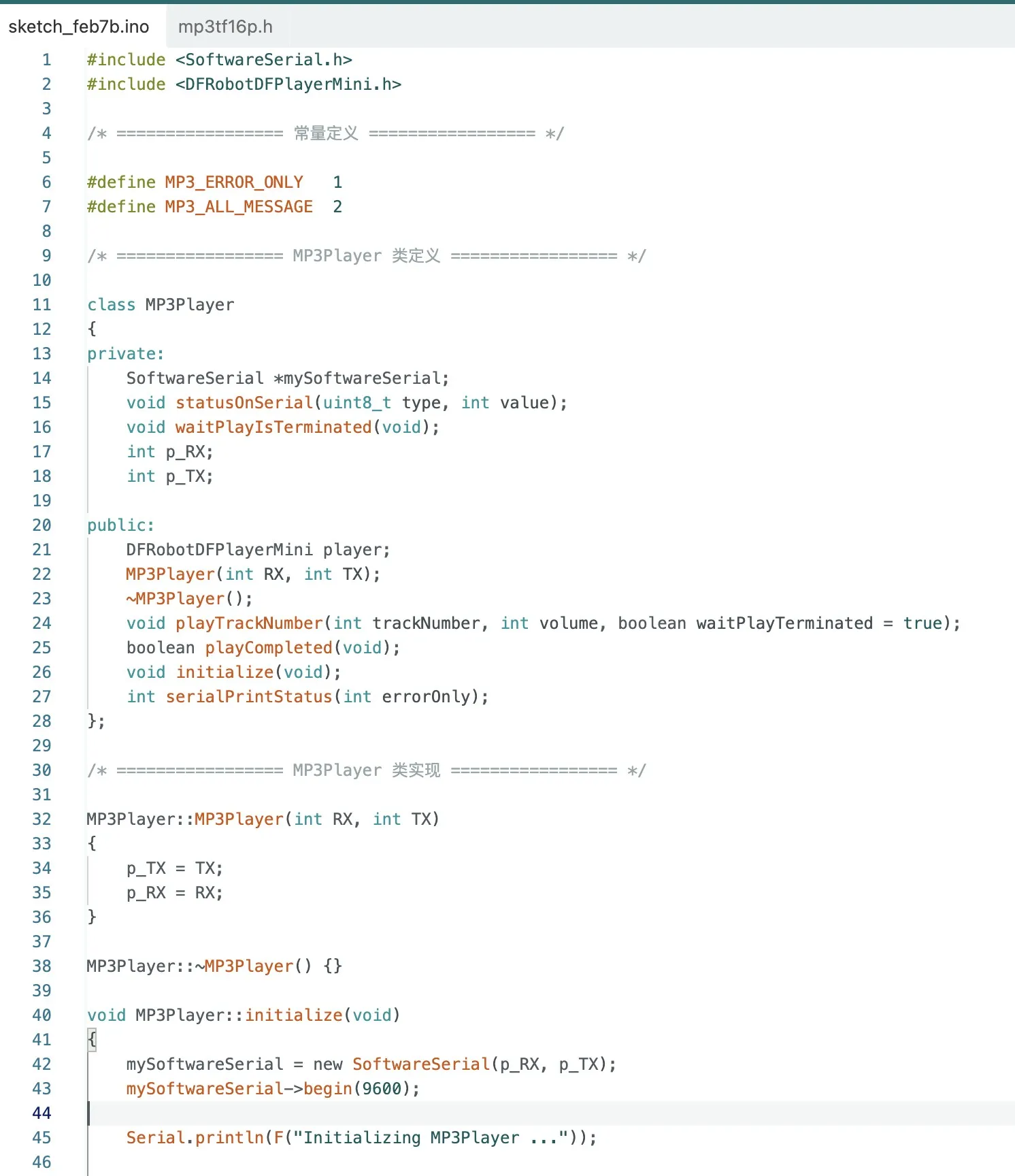
Code and circuit
Fabrication and installation
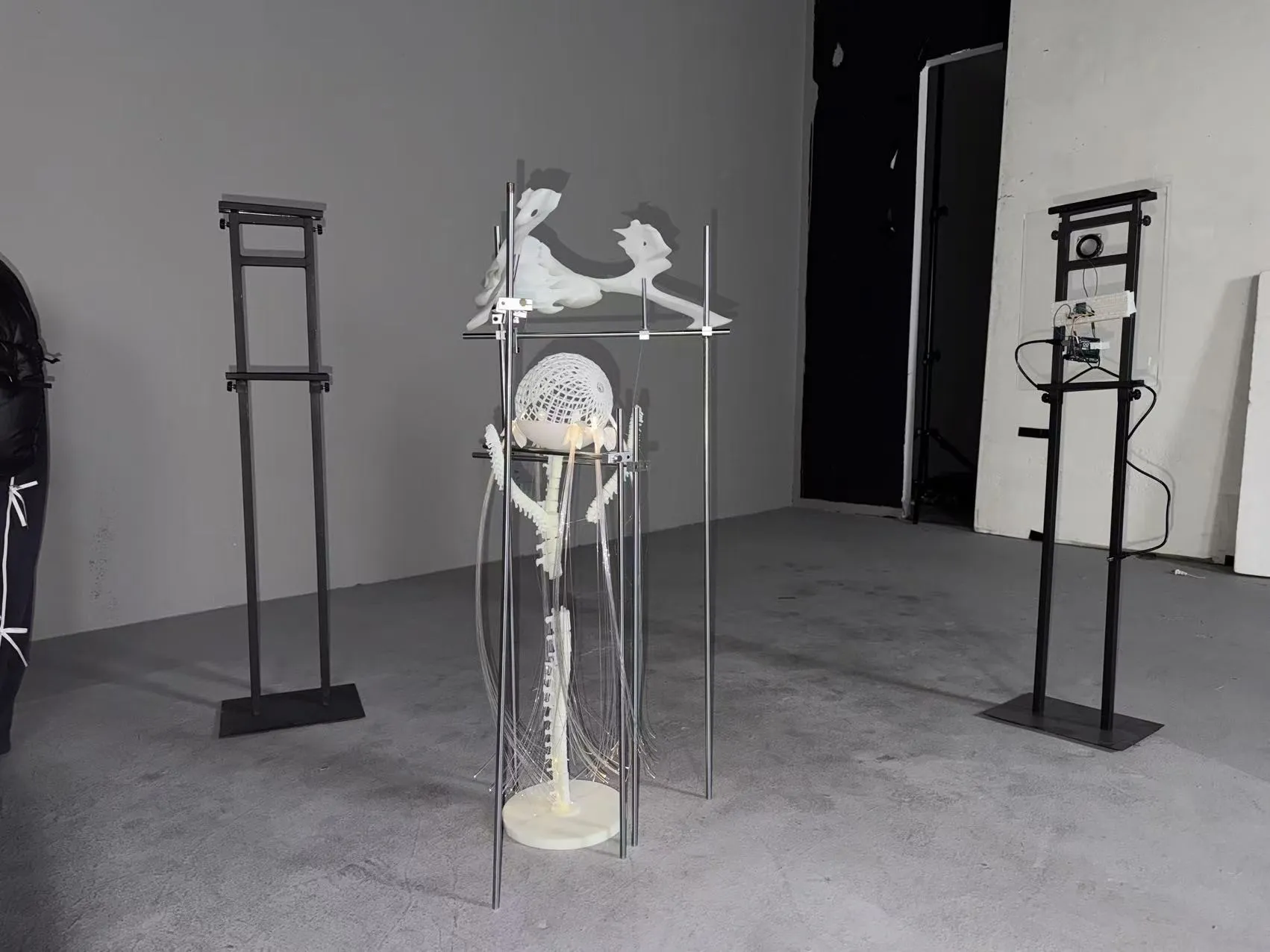
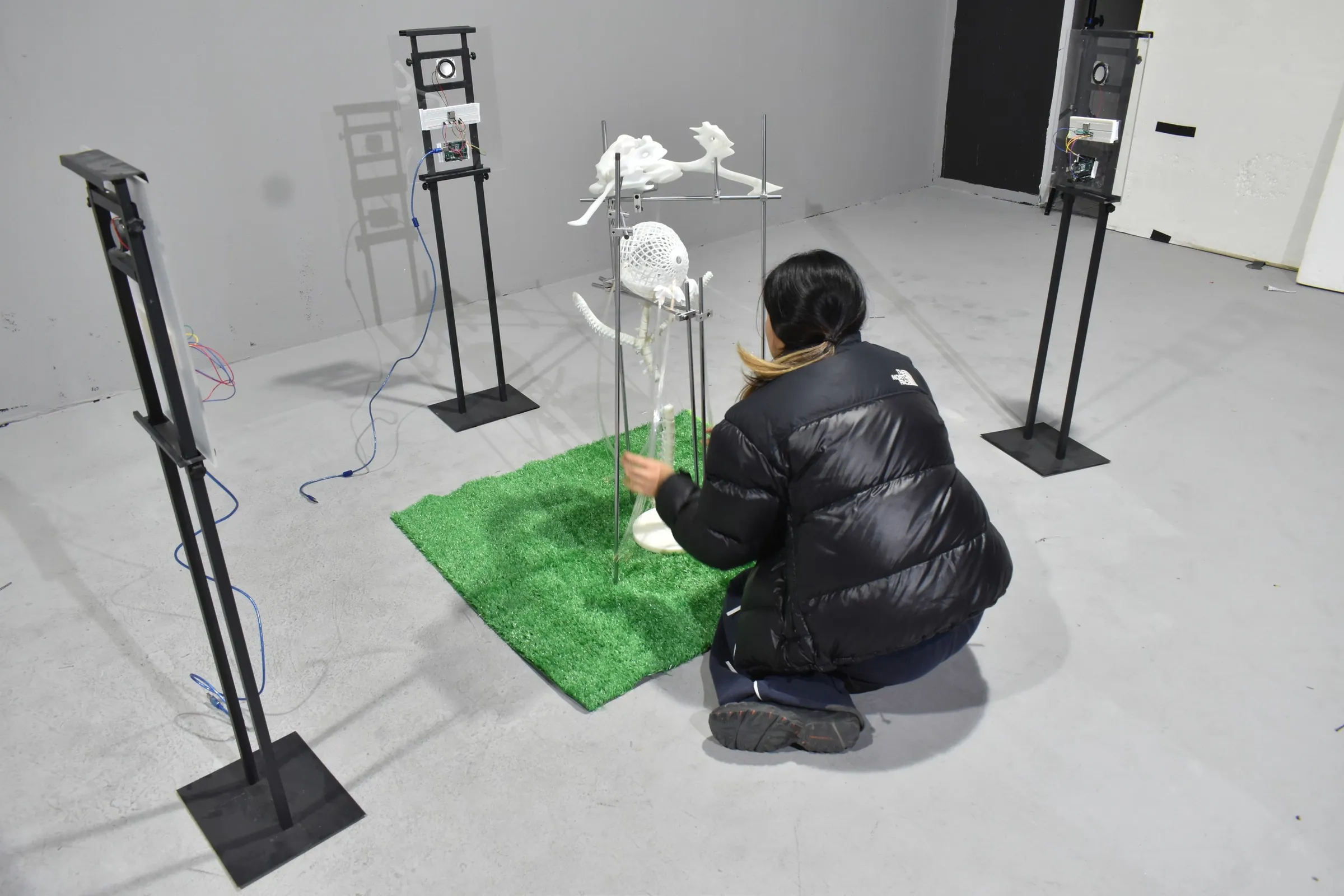
Installation views